

Most Developers Ship Vulnerable Code Without Knowing It
This isn’t an insult. It’s a structural reality of how software development is taught. Computer science curricula cover data structures, algorithms, and system design. Bootcamps cover frameworks and shipping products fast. Neither puts significant emphasis on security thinking. The result is millions of developers who write functional code and don’t know that the login form they built last month is vulnerable to SQL injection, or that the comments section they added to the blog is a reflected XSS waiting for someone to find it.
Security knowledge is the part most developers acquire the hard way — after something breaks, or after a penetration tester finds a hole in a production system, or after reading a post-mortem about a breach that looks uncomfortably familiar.
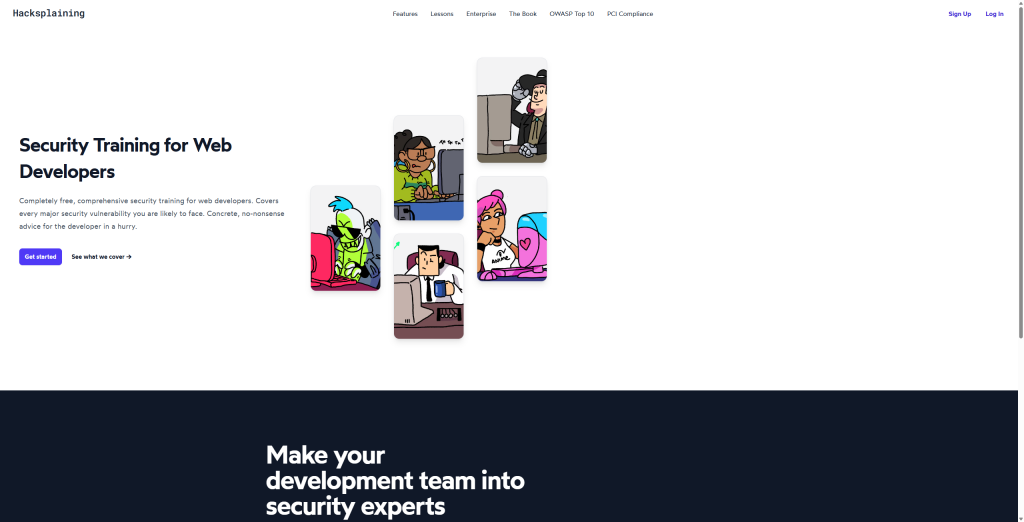
Hacksplaining is a free platform built to close that gap before the incident rather than after it. The approach is deliberately inverted: instead of teaching you to defend against attacks, it teaches you to perform the attacks first — on real, vulnerable applications running in your browser — and then shows you how the vulnerable code works and how to fix it. It covers every major security vulnerability and aligns to the OWASP Top 10. It’s completely free for individual use. And it’s one of the most practically useful free developer resources on the internet.
The Attack-First Learning Model — Why It Works
Traditional security training explains vulnerabilities in the abstract: “SQL injection occurs when unsanitized user input is interpolated directly into a database query.” You read it. You understand it conceptually. You move on. Three months later you write a login form and make the exact mistake the training described, because abstract knowledge doesn’t transfer as reliably as experiential knowledge.
Hacksplaining’s model is different. Each lesson puts you in the position of the attacker. You type a SQL injection payload into a live form field and watch the query break and return unauthorized data. You craft a cross-site scripting payload and see it execute in a browser. You exploit a directory traversal vulnerability and read a file you shouldn’t have access to. You are the attacker. The damage is real within the sandbox.
Then the lesson pivots. It shows you the vulnerable code that made your attack possible. It shows you the secure version of the same code. It gives you concrete, language-specific examples in Python, PHP, Ruby, Java, C#, and other common server-side languages. A quiz reinforces the fix before you move on.
The psychology of this sequence is sound. You’ve felt the vulnerability. You’ve seen what an attacker sees. The fix is no longer abstract — it’s the thing that would have stopped you.
What Hacksplaining Covers
The lesson catalog is extensive. It covers all OWASP Top 10 categories and breaks each category into individual technique-level lessons. The full list includes:
Injection Attacks
SQL injection is covered in multiple lessons — classic injection, blind injection, error-based extraction. Command injection, LDAP injection, and XML injection each have standalone lessons with live exploitable examples. These are the vulnerabilities responsible for a significant proportion of real-world data breaches, and Hacksplaining treats them with the depth they deserve.
Cross-Site Scripting (XSS)
Reflected XSS, stored XSS, and DOM-based XSS are each covered separately — which matters because the attack vectors and defensive measures differ meaningfully between types. Stored XSS in particular is covered with enough depth that developers understand why content security policies exist beyond just “browsers can block scripts.”
Authentication and Session Management
Password storage (hashing, salting, bcrypt vs. SHA1 — this section alone is worth the visit), session fixation, session hijacking, brute force protection, and privilege escalation are all covered. These lessons are particularly valuable for developers who have rolled their own authentication systems without fully understanding the security surface they were creating.
Access Control and Sensitive Data
Insecure direct object references, path traversal, file upload vulnerabilities, and broken access control scenarios each have dedicated lessons. The file upload lessons in particular are excellent — the interactive component makes visceral what “unrestricted file uploads” actually means in practice.
Other Notable Topics
CSRF, open redirects, clickjacking, server-side request forgery (SSRF), XML external entity injection (XXE), insecure deserialization, and security misconfiguration each have lessons. The breadth is genuinely comprehensive — this is not a cherry-picked selection of popular vulnerabilities, but a serious attempt to cover the full attack surface a web application developer is likely to face.
Strengths and Limitations
✅ What Makes Hacksplaining Worth Recommending
- The attack-first, fix-second learning model builds experiential understanding that passive reading doesn’t
- All core lessons are free for individual developers — no subscription required to access the full curriculum
- Multi-language code examples (Python, PHP, Ruby, Java, C#) make defensive fixes immediately applicable to real projects
- OWASP Top 10 alignment means the content maps to industry-standard security assessment frameworks
- No specialized tooling or environment setup required — everything runs in the browser
- Over 523,000 users and 500+ paying enterprise customers — the platform has genuine credibility at organizational scale
- Quizzes after each lesson create retention without being condescending about it
❌ Where It Has Limitations
- Not a substitute for hands-on penetration testing practice in dedicated lab environments like HackTheBox or TryHackMe
- Coverage is web-application-specific — network security, mobile security, and infrastructure topics are outside scope
- Content is primarily at the awareness and foundational level; experienced security engineers won’t find advanced red team or exploit development content here
- Lesson update frequency varies — some content may lag behind emerging vulnerability patterns or framework-specific security developments
- No formal certification upon completion for individuals (enterprise tier offers team progress tracking and compliance documentation)
- The interactive components work best on desktop — mobile use is functional but not optimal for the code-reading portions
How It Compares to Other Security Learning Resources
vs. OWASP WebGoat
OWASP WebGoat is a deliberately insecure application that developers install locally and attack as a learning exercise. It’s technically deeper than Hacksplaining and represents the gold standard for hands-on web application security education. But it requires setup — running a local Java application, configuring a proxy, sometimes troubleshooting your environment before the learning even starts. Hacksplaining runs in the browser with zero setup. For developers who want to start learning security today without spending an hour configuring a local environment, Hacksplaining is the better on-ramp. Bottom line: Start with Hacksplaining to build conceptual foundations; progress to WebGoat and similar lab environments when you’re ready for deeper technical practice.
vs. TryHackMe (Beginner Security Paths)
TryHackMe offers gamified cybersecurity learning paths that cover web vulnerabilities alongside broader security topics — networking, Linux, privilege escalation, CTF-style challenges. It’s more comprehensive in scope and more gamified in structure. But the free tier is limited, the full content requires a subscription, and it’s designed for people pursuing security roles — not primarily for web developers looking to improve the security posture of the applications they’re already building. Hacksplaining is laser-focused on the developer use case: here is what attackers do to web applications, here is the code change that stops them. Bottom line: TryHackMe for people pursuing security careers; Hacksplaining for developers who want their applications to stop being easy targets.
Pricing: Individual and Enterprise
- Individual access: Fully free — all core lessons, interactive components, and code examples
- Enterprise licensing: Paid — team-level access with progress tracking, compliance reporting, and PCI DSS support documentation
- Team onboarding: Paid — structured onboarding paths for development teams building a shared security foundation
- Account required: Optional for individuals — progress tracking across sessions requires a free account
Individual developers can access every lesson at no cost. Start your first Hacksplaining lesson now →
Who Should Make Time for This
Hacksplaining is the right resource if you:
- Build web applications and want to understand what your attack surface actually looks like
- Are a junior or mid-level developer who didn’t get formal security training in school or at a bootcamp
- Are a team lead or engineering manager who wants your team to have a shared security vocabulary and baseline
- Work in a regulated environment (PCI DSS, HIPAA) and need to demonstrate security awareness training
- Have been through a security incident or code review finding and want to understand the underlying vulnerability properly
- Are preparing for a security-aware code review or penetration test on your application
- Want to move faster through security topics than a textbook or full certification track allows
- Learn best by doing rather than reading — the interactive exploitation model is specifically designed for you
You’ll need something more if you:
- Are pursuing a professional security or penetration testing role — Hacksplaining is a foundation, not a career track
- Need training on network security, cloud infrastructure, or mobile application security specifically
- Want formal certification that employers recognize — CompTIA Security+, CEH, and similar exams require dedicated preparation tracks
- Are an experienced application security engineer looking for advanced exploit development content
- Need security training that covers your specific framework or language ecosystem in depth
Final Verdict
Hacksplaining makes a simple, compelling argument: you’ll write more secure code if you’ve seen what insecure code looks like from the attacker’s perspective. That argument is correct. The platform delivers on it cleanly, for free, without requiring you to install anything or configure a lab environment.
For its specific audience — working developers who want to understand security without pivoting into a security career — there is nothing better in the free tier. The interactive exploitation model isn’t gimmicky. It builds the kind of intuitive recognition that lets you catch a potential SQL injection in a code review before it reaches production, rather than after a penetration tester finds it in staging.
The limitations are real: this is web application security at the foundational and intermediate level, not a comprehensive security engineering curriculum. But within that scope, it’s exceptional — and it’s free, which removes every barrier to starting.
Rating: 4.5 / 5 stars — Required reading for any web developer who has never done formal security training. Spend a few hours with this before your next code review. Start learning for free at hacksplaining.com →
Disclosure: This article contains affiliate links. Clicking through and completing a purchase or sign-up may result in compensation to us. Our editorial review is independent and not influenced by these arrangements.