
What If Saving More Isn’t Actually the Goal?
You’ve been following the rules for years. Save hard. Spend wisely. Invest for retirement. Wait for the reward. It’s good, sound advice—and you’ve been taking it. But lately, a small, gnawing voice has begun to creep into your mind. What am I actually saving all this for?
Look at your parents, who are now in their 70s, and you see that they’re just too tired, too sick, or too cranky to enjoy the money they’ve been saving for all these years. You see that you’ve been putting off the trip, the sabbatical, the experience. Do you keep telling yourself there’ll be a better time down the road? But the better time never quite gets here.
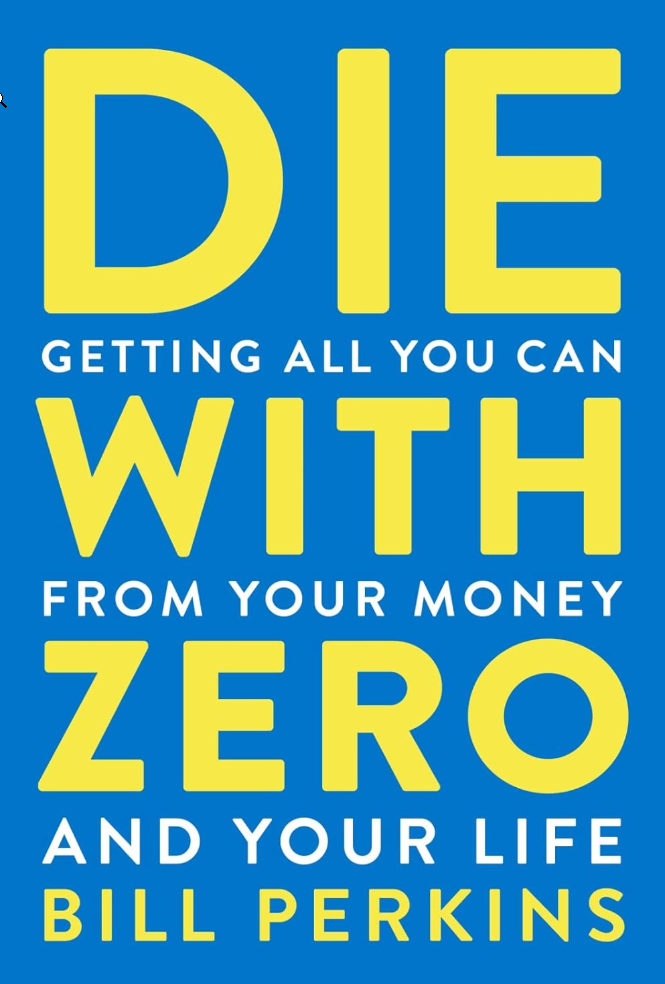
That small, nagging voice is exactly what Die With Zero: Getting All You Can from Your Money and Your Life, by Bill Perkins, is meant to speak to. It’s a bold, deeply personal, and thoroughly humanistic rejection of all the conventional wisdom about personal finance. It’s a book that asks not how to save more, but how to make sure that the money you do save is used to live a life that’s truly well-lived. This review will give you a full and fair look at what the book has to say, and whether or not it’s something you should be reading.
What Is Die With Zero?
Bill Perkins wrote Die With Zero, a personal finance and philosophy book., a hedge fund manager, entrepreneur, and self-proclaimed “experience maximalist.” Perkins published the book in 2020, and its central, provocative thesis is this: the point of financial life isn’t to die with as much money as possible. It’s to die with as close to zero as possible—having spent your money on the things that actually gave you a life of fulfillment while you were still healthy enough to enjoy it.
This is not a budgeting book or an investment guide. There are no steps for account setup or automation systems in this book. Rather, Die With Zero is a book of values and long-term life design, encouraging readers to question the very point of money itself and what they are ultimately trying to achieve.
Who Is This Book For?
This book will be most relevant to financially secure individuals in their 30s, 40s, and 50s who have already established a decent savings base but are now wondering if they are using their money and their time in a way that truly reflects what they value most. It will speak directly to:
“High earners and hard workers who are inexplicably unfulfilled despite doing everything ‘right'”
Individuals on the cusp of middle age who are starting to feel the pressure of postponed experiences
Anyone who has ever known a parent or loved one who has saved diligently their entire life only to never really enjoy it
Individuals who are already financially savvy and are looking for a philosophical approach to accompany their technical knowledge of money management
Individuals grappling with questions of legacy, generosity, and what constitutes a rich life beyond simple financials
This book does not serve readers who are still building financial stability. A more basic personal finance primer is a better starting point for those readers.
Key Ideas: What You’ll Actually Take Away
1. The Life-Energy Equation: Time, Health, and Money
Perkins offers a model that graphs three variables against your lifetime: money, health, and free time. The point is simple but profound: these three things rarely coincide. You have the energy and time of youth, but not money. You have money and time in retirement, but not necessarily health and energy. The overlap, the point where all three meet, is a brief period in your middle age. The book urges you to find this overlap and spend more of it, rather than saving for a future version of yourself who may not be able to enjoy what you’re saving.
2. Experiences Generate “Memory Dividends”
One of the book’s strongest ideas is the “memory dividend.” When you spend money on an experience, you enjoy it now. You also continue to benefit from the memory for years. You’re continuing to reap rewards from that memory for years and decades to come. Perkins suggests that this return on investment is systematically underestimated when people make spending decisions, causing them to save too much money that earns no return and spend too little on experiences that earn a significant return.
3. “Seize the Experiences” — The Case Against Perpetual Deferral
Perkins has a strong point about many experiences having an inherent shelf life. The idea of backpacking through Southeast Asia at 60 is not the same as doing it at 28, not because one is impossible but because your body, your energy, and your perspective on novelty and risk are simply different. The book urges readers to stop thinking of experiences as rewards down the line and to recognize that some of these windows are quietly closing. This is not meant to be a panic button but to inject a sense of urgency into life planning that is almost entirely ignored by financial planning, which is almost entirely focused on the future.
4. Give Money Away While You’re Alive to See It Matter
One of the more personal and emotional points of the book has to do with inheritance and generosity. Perkins urges readers to reconsider the traditional model of leaving a large financial legacy to loved ones after death. Instead, he urges readers to give financial gifts to the people who matter to them while they are still alive and able to see the difference it makes. Most people receive inheritances in their 50s or 60s, but it is likely that they will need the money less at this age than they would have in their 30s. Giving the money earlier, Perkins suggests, multiplies the power of the same dollar amount.
5. Calculate a “Personal Survival Threshold” — Then Spend the Rest
Rather than encouraging people to spend money willy-nilly, Perkins suggests a system for determining how much money a person needs in order to be secure and then spending the rest. This is not about being reckless with money but about recognizing when the point of accumulation has been reached and when it is simply a failure of imagination.
6. Rethinking Retirement as a Concept
Perkins rejects the all-or-nothing model of retirement. The traditional formula says work for 40 years, then stop completely. He proposes something more flexible. He argues for a more balanced approach to leisure, travel, and rest, spreading it out throughout your working life rather than saving it all for one act in the final chapter. This section will strongly resonate with readers who feel like they’re stuck on a treadmill and haven’t thought about the fact that the treadmill itself is up for debate.
Honest Pros and Cons
✅ Pros
A completely original take. In a field of books that all seem to be “spend less, save more” variations on a theme, Perkins asks a completely different question, and asks it well. The thesis is original, interesting, and hard to argue with.
Emotionally resonant. This book has a way of making readers feel like they’ve discovered a hidden truth about deferred living that they didn’t know they felt. For many readers, this will be the most personal finance book they’ve ever read – not because it taught them something new, but because it shifted their thinking.
The concepts are highly reusable. The memory dividend, the three-variable life chart, the personal survival threshold – all of these are concepts that you’ll find yourself applying long after the book is closed.
Challenges conventional wisdom in a positive way. Perkins isn’t here to tell you that saving money and financial security are bad things. He agrees that they’re necessary – he just thinks that they’re not enough, and that the question of what for is a lot more important than it’s currently given credit for.
Accessible and engaging. The book is a quick read, clocking in at about 250 pages.
❌ Cons
Perkins is a hedge fund manager. This is a book written from a position of wealth. Some readers will rightly point out that the “spend it while you can” philosophy is one thing when your survival threshold is comfortably met. The book is most relevant to readers who have already achieved a certain level of financial stability.
Light on practical advice. If you’re looking for a step-by-step guide to calculating your own survival threshold or building an experience budget, this isn’t the book for you. The book is very much a philosophical treatise, but some readers will find it lacking in certain areas.
Doesn’t fully explore the impact of healthcare and longevity risk. Perkins recognizes these factors but doesn’t give them the treatment they deserve, especially for readers who are worried about long-term care costs or medical uncertainty in their golden years.
Some chapters feel repetitive. The thesis is well-articulated and early on. Several of the middle chapters explore the same concepts from different perspectives, which will feel reinforcing to some readers and padded to others.
Not a primer for new investors. Readers who haven’t yet established savings, paid off debt, or built an investment foundation may find this book to be a bit too little, too late—and potentially even counterproductive if it inspires readers to spend before they’ve put their financial house in order.
Final Verdict
Die With Zero isn’t a traditional personal finance book. And that is exactly why it stands out. It will not walk you through setting up a Roth IRA or optimizing your savings rate. Instead, it asks a deeper question most financial advice avoids: Why are you building wealth in the first place? Are you actually living the life you want?
For readers who already have a solid financial foundation but feel that more security has not translated into more happiness, this book can be eye opening. Its core idea of the “memory dividend” encourages you to invest in meaningful experiences now rather than endlessly deferring enjoyment. Many readers find themselves rethinking priorities, taking overdue trips, giving generously to loved ones earlier, or finally enjoying what they have worked so hard to accumulate.
The book is not without flaws. Some arguments feel repetitive, the advice can be broad, and its perspective will not apply universally. Still, its central message is powerful: a rich life is measured by experiences, not by the size of your estate. For anyone ready to rethink what money is actually for, Die With Zero offers a compelling perspective.
⭐⭐⭐⭐½ — 4.5 out of 5 stars for financially stable readers ready to think differently
👉 Get your copy of Die With Zero on Amazon and start asking the questions your financial plan probably isn’t asking for you.
Affiliate Disclosure: This post contains affiliate links. If you purchase through our links, we may earn a small commission at no additional cost to you. We only recommend books and resources we genuinely believe can make a meaningful difference in how you think about money and life.