

Still Paying Yourself Last — and Wondering Why Nothing Changes?
You get paid. Bills go out. Life happens. And somehow, at the end of every month, your savings look almost exactly like they did the month before. You know you should be investing, building an emergency fund, or at least doing something smarter with your money — but between conflicting advice online and a general sense of overwhelm, you keep putting it off.
Sound familiar? You’re not lazy or irresponsible. You’re just missing a system.
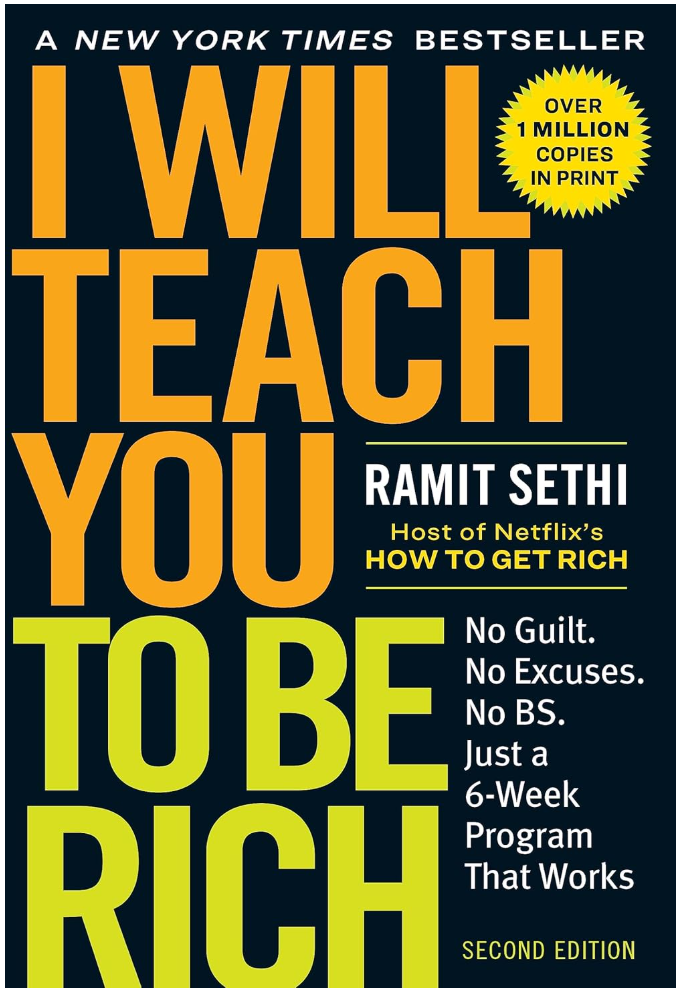
That’s the core promise of I Will Teach You to Be Rich: No Guilt. No Excuses. Just a 6-Week Program That Works by Ramit Sethi. Now in its fully updated Second Edition, this book has helped millions of readers stop procrastinating on their finances and start building real, lasting wealth — without giving up the things they actually enjoy. This review gives you a clear-eyed look at whether it’s worth your time and money.
What Is I Will Teach You to Be Rich?
I Will Teach You to Be Rich is a practical, no-fluff personal finance guide written by Ramit Sethi — Stanford-educated entrepreneur, founder of IWT (I Will Teach You to Be Rich), and one of the most influential voices in modern personal finance. The Second Edition, published in 2019, refreshes the original with updated bank and brokerage recommendations, expanded sections on side hustles and salary negotiation, and guidance on using today’s best fintech tools.
At its core, the book is structured as a six-week action plan. Each week tackles a specific pillar of personal finance — credit cards, bank accounts, investing, conscious spending, automation, and building long-term wealth. Rather than drowning you in theory, Sethi gives you concrete tasks to complete each week, making the entire process feel manageable and — surprisingly — motivating.
Who Is This Book For?
This book was written specifically for adults in their 20s and 30s who are earning a real income but haven’t yet built a solid financial foundation. It’s an ideal fit for anyone who:
- Has a steady paycheck but little to show for it at month’s end
- Wants to start investing but feels paralyzed by where to begin
- Has tried budgeting before and burned out within weeks
- Is carrying credit card debt and isn’t sure how to tackle it strategically
- Wants one clear, trustworthy roadmap instead of scattered blog posts and YouTube rabbit holes
It’s not designed for seasoned investors, readers managing serious financial crises, or those outside the US seeking country-specific guidance. But for its core audience — the financially curious beginner or intermediate earner — it’s hard to beat.
Key Features: What You’ll Actually Get Out of This Book
1. A Week-by-Week Action Plan That Forces Progress
Most personal finance books give you inspiration and principles. This one gives you a to-do list. Each week ends with specific, time-bound tasks: open this account, make this phone call, set up this automatic transfer. That level of specificity is rare — and it’s exactly what turns readers into doers. If you’ve read plenty of finance books without changing your behavior, this structured format may be the missing piece.
2. The Conscious Spending Plan — a Budget That Doesn’t Feel Like One
Sethi replaces the traditional budget (which most people abandon within a month) with a Conscious Spending Plan. The idea: cover your fixed costs, automate your savings and investments, then spend whatever’s left — guilt-free — on the things you genuinely love. This reframe removes the shame spiral that kills most budgeting attempts and replaces it with intentionality. It’s a small philosophical shift with a big behavioral impact.
3. Automation as the Foundation of Financial Success
One of the book’s most genuinely useful contributions is its automation blueprint. Sethi walks you through connecting your checking account, savings account, investment accounts, and bill payments so that money flows where it needs to go — automatically, every month — before you ever have a chance to spend it on something else. Once the system is running, maintaining your finances takes less than an hour a month. This alone is worth the price of the book for most readers.
4. Credit Cards Treated as Tools, Not Enemies
Unlike some financial advisors who tell you to cut up your credit cards, Sethi explains how to use them strategically to build credit, earn rewards, and benefit from fraud protections — provided you pay the balance in full each month. This nuanced, adult perspective on credit is something beginners rarely get, and it can be worth thousands in avoided interest and missed rewards over a lifetime.
5. Investing Explained in Plain English
Sethi demystifies 401(k)s, Roth IRAs, index funds, and employer match contributions in language that actually makes sense to someone who’s never opened a brokerage account. He tells you which accounts to prioritize, in what order, and what to put inside them — without overwhelming you with market theory. For a first-time investor, this clarity is invaluable.
6. New in the Second Edition: Salary Negotiation, Side Hustles & Fintech
The updated edition expands meaningfully on earning more — not just spending less. Sethi includes negotiation scripts for salary conversations, frameworks for evaluating side income opportunities, and updated recommendations for high-yield savings accounts and modern financial apps. These additions make the book feel current and well-rounded in a way the first edition didn’t fully achieve.
Honest Pros and Cons
✅ Pros
- Genuinely actionable. Every chapter ends with specific steps. This is a book you do, not just read.
- No guilt, no lectures. Sethi’s philosophy respects that spending on things you love is part of a rich life — not a character flaw to fix.
- Covers the full picture. Banking, credit, investing, spending, automation, and earning more — all in one place.
- Readable and engaging. Sethi’s voice is direct, occasionally funny, and never condescending. It reads fast.
- Updated content. The second edition addresses fintech tools, modern account options, and income-building strategies that reflect today’s financial landscape.
- Especially strong for procrastinators. The weekly structure and explicit deadlines are engineered to overcome the inertia that keeps people from ever starting.
❌ Cons
- US-only relevance. Account types, tax-advantaged vehicles, and institution recommendations are almost entirely American. International readers will need to adapt heavily.
- Assumes income stability. The automation model works best for salaried employees. Freelancers or gig workers with variable income may find some steps harder to implement.
- Light on heavy debt strategy. Sethi covers credit card debt, but readers facing significant student loan or medical debt may need a dedicated supplemental resource.
- Bold tone isn’t for everyone. Sethi’s confident, occasionally blunt style motivates many readers but can feel dismissive to those in more financially precarious positions.
How It Compares to the Competition
vs. The Total Money Makeover by Dave Ramsey
Ramsey’s classic is the gold standard for readers who need to get out of debt fast. His Baby Steps approach is disciplined and motivating — but also restrictive, anti-credit-card, and laser-focused on debt elimination above all else. It’s designed for financial crisis mode. Sethi’s book, by contrast, is built for readers who are earning and want to optimize their finances for long-term wealth, not just survive a rough patch. If aggressively paying off debt is your singular priority right now, Ramsey may be more immediately useful. For building a complete financial life from the ground up, Sethi’s framework is broader and more sustainable.
vs. Your Money or Your Life by Vicki Robin
Robin’s influential book asks readers to reframe money as life energy — encouraging deep reflection on what you’re trading your hours for and steering toward financial independence. It’s a meaningful, values-driven read that pairs beautifully with Sethi’s approach. But it’s slow-paced, philosophical, and light on tactical next steps. Where Robin asks you to reflect over months, Sethi asks you to act this week. Both perspectives are valuable, but for readers who want results quickly, I Will Teach You to Be Rich has a clear tactical edge.
The verdict: Sethi’s book is the most complete, beginner-ready option of the three. It won’t serve every financial situation equally — but for its target audience, nothing covers as much ground as clearly or as usefully.
Pricing Breakdown
I Will Teach You to Be Rich (Second Edition) is available in multiple formats on Amazon at different price points:
- Paperback: Typically $14–$18 — the most popular format, ideal for highlighting and note-taking
- Hardcover: Generally $22–$28 depending on availability
- Kindle / eBook: Usually $10–$13 — best for instant access or reading on the go
- Audible Audiobook: Available via Audible subscription or individual purchase — a strong choice for commuters and audio learners
For context: the strategies in this book — better credit management, employer match optimization, and a single salary negotiation conversation — can realistically generate thousands of dollars in returns over the first year alone. The cover price is one of the lowest-risk investments you can make in your financial future.
👉 Check the latest price and available formats on Amazon.
Who Should Buy This Book?
Buy it if you:
- Are in your 20s or 30s and want to build a real financial foundation from the ground up
- Have been meaning to “get your finances together” for a while and need a structured push to actually start
- Want to begin investing but feel lost about where or how to start
- Are tired of restrictive budgeting methods that make you feel deprived
- Want to automate your money so it manages itself in the background
- Are looking for one trustworthy, comprehensive resource instead of piecing together advice from ten different sources
Skip it or supplement it if you:
- Live outside the US and need country-specific account and tax guidance
- Are in active financial crisis and need an aggressive, focused debt-payoff strategy first
- Already have a solid investing strategy and are looking for advanced portfolio or tax optimization
- Prefer a values-based, philosophical approach to money over a tactical, action-first one
Final Verdict
After more than a decade and millions of copies sold, I Will Teach You to Be Rich has earned its reputation — and the Second Edition only strengthens it. Ramit Sethi doesn’t just explain personal finance; he systematically removes every excuse you’ve been using to delay taking action. The six-week program is specific enough to be immediately actionable and flexible enough to work across different income levels and lifestyles. And crucially, it doesn’t punish you for enjoying your money along the way.
Is it perfect? No. It skews US-based, works best for stable earners, and won’t replace a dedicated debt-elimination guide if that’s your most urgent need. But for what it sets out to do — giving a financially curious person a complete, guilt-free system for managing, growing, and enjoying their money — it delivers more clearly and practically than almost anything else in the genre.
If you’ve been waiting for the right time to finally get your finances in order, this book makes a compelling case that the right time is now.
⭐⭐⭐⭐⭐ — 5 out of 5 stars for beginners and intermediate readers
👉 Get your copy of I Will Teach You to Be Rich on Amazon and start your six-week financial reset today.
Affiliate Disclosure: This post contains affiliate links. If you purchase through our links, we may earn a small commission at no additional cost to you. We only recommend books and resources we genuinely believe can make a difference in your financial life.