
Most New Businesses Fail — Usually for a Preventable Reason
You have an idea. You believe in it. You spend months building it out. Then you launch — and almost nobody cares. That’s not bad luck. That’s a process problem. Most entrepreneurs build products based on assumptions. They never stop to test whether those assumptions are true. The Lean Startup by Eric Ries was written to solve exactly that problem.
Published in 2011, the book introduced a methodology that changed how startups think about building and launching products. The core idea is simple: stop guessing. Build small, test fast, and learn from real data before committing more time and money. That loop — build, measure, learn — is at the heart of everything Ries teaches.
More than a decade later, the principles still hold. Whether you’re launching a business, a side hustle, or a new product inside a larger company, the framework is relevant. The question is whether this specific book is the right way to learn it. This review breaks that down honestly.
What Is The Lean Startup?
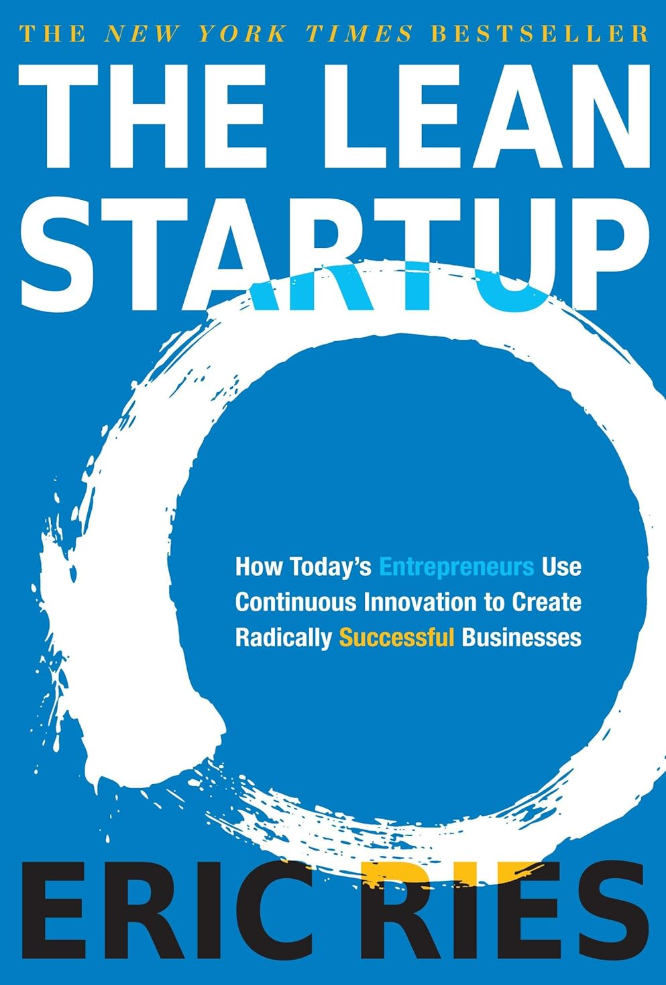
The Lean Startup: How Today’s Entrepreneurs Use Continuous Innovation to Create Radically Successful Businesses is a business methodology book by Eric Ries. Ries draws on his experience as a startup founder and advisor. He combines principles from lean manufacturing, agile development, and customer development into a single actionable framework for building new ventures.
The book argues that most startups fail not because of bad ideas, but because of bad processes. It gives entrepreneurs and product builders a structured way to test ideas quickly, reduce waste, and make smarter decisions with limited resources.
- Author: Eric Ries
- Publisher: Crown Business
- First Published: 2011
- Format: Hardcover, Paperback, Kindle, Audiobook
- Pages: 336
- Topic: Startup methodology, product development, innovation
- Level: Beginner to intermediate — no prior business knowledge required
Who It’s For
This book is written for anyone who wants to build something new — and wants to do it without wasting years going in the wrong direction. The target reader is practical and results-oriented. They’re not looking for inspiration. They want a repeatable process they can apply immediately.
- First-time entrepreneurs trying to validate a business idea before investing heavily
- Side hustlers looking to test a product or service concept with minimal upfront cost
- Product managers inside larger companies running new initiatives or features
- Small business owners trying to make smarter decisions about where to invest resources
- Anyone who has launched something that flopped and wants to understand why
- Freelancers or consultants building a productized service or digital product
- Investors and advisors who want to evaluate startup processes, not just ideas
- Financial literacy seekers who want to understand how modern businesses are built and funded
Key Features
1. The Build-Measure-Learn Loop
The book’s central framework is the Build-Measure-Learn feedback loop. Rather than building a complete product in secret, you build the smallest testable version. You measure how real users respond. Then you learn from that data and decide whether to continue, adjust, or change direction entirely.
This loop is designed to compress the time between idea and validated learning. It shifts the question from “did we build it?” to “did we learn something useful?” That reframe matters enormously for resource-constrained founders.
2. The Minimum Viable Product (MVP) Concept
Ries popularized the term minimum viable product — the simplest version of a product that allows you to test a key assumption with real users. An MVP isn’t a half-finished product. It’s a deliberate learning tool. It’s built to answer a specific question as quickly and cheaply as possible.
The book gives multiple real-world examples of what MVPs look like in practice. That context is useful. The concept is often misapplied — Ries defines it carefully enough to prevent the most common misunderstandings.
3. Validated Learning as a Business Metric
One of the book’s most valuable ideas is validated learning — the concept that learning counts only when it’s backed by real data from real customers. Opinions, surveys, and focus groups don’t qualify. Actual behavior does.
This redefines what progress means for a startup. Moving fast doesn’t matter if you’re moving in the wrong direction. Validated learning forces you to measure what actually matters to the business.
4. The Pivot or Persevere Decision Framework
Ries introduces a structured way to decide when to pivot — fundamentally change your strategy — and when to persevere with your current direction. This is one of the hardest decisions a founder faces. The book gives you a framework to make it based on evidence, not emotion.
He also names different types of pivots: zoom-in, zoom-out, customer segment, platform, and others. That taxonomy is genuinely useful for founders trying to describe and evaluate their options.
5. Innovation Accounting
Innovation accounting is Ries’s answer to a real problem: how do you measure progress when traditional financial metrics don’t apply yet? He proposes using actionable metrics tied to the assumptions in your business model. Vanity metrics — page views, downloads, followers — feel good but tell you nothing about whether the business will work.
This section is particularly valuable for anyone who has confused activity with progress. It connects directly to better financial decision-making for early-stage ventures.
6. Applying Lean Principles Inside Large Organizations
The final section of the book addresses how lean startup principles apply inside larger, established companies. Ries introduces the concept of the “innovation sandbox” — a contained environment where new initiatives can run lean experiments without disrupting core operations.
This makes the book useful beyond the solo founder context. Product managers and corporate innovators will find practical ideas here for navigating bureaucratic environments while still testing and iterating quickly.
Honest Pros and Cons
✅ Pros
- Introduces a practical, repeatable framework that applies across industries and business types
- Concepts like MVP and validated learning have proven staying power well beyond the book’s publication date
- Case studies ground the theory in real situations — not just abstract advice
- Accessible writing style requires no background in business, tech, or entrepreneurship
- The pivot framework gives founders a principled way to make one of the hardest decisions they’ll face
- Innovation accounting offers a genuinely useful alternative to vanity metrics for early-stage teams
❌ Cons
- Some sections feel repetitive — key ideas are restated across multiple chapters
- The book leans heavily on tech startup examples, which can feel distant from other business types
- Since 2011, many of the ideas have been widely taught — experienced entrepreneurs may find little that’s new
- The “lean” label has been diluted and misused in business culture, which creates some confusion around the book’s core definitions
- Limited guidance on execution specifics — the framework is clear, but implementation details are left to the reader
- The tone occasionally veers into evangelism, which can feel less credible than a more skeptical perspective would
How It Compares
vs. Zero to One by Peter Thiel
Peter Thiel’s Zero to One takes a fundamentally different view. Where Ries focuses on process and iteration, Thiel argues that the best companies are built on breakthrough insights — not incremental improvements. Thiel is skeptical of lean thinking in contexts requiring true innovation. The two books represent a genuine philosophical tension in startup thinking. The Lean Startup is more immediately actionable for most founders; Zero to One is more useful for shaping long-term strategic thinking.
Bottom line: Read both — they complement each other more than they compete.
vs. The $100 Startup by Chris Guillebeau
Chris Guillebeau’s book targets a similar audience but focuses on solo entrepreneurs and lifestyle businesses rather than scalable startups. It’s more practical for someone building a small business with limited capital. It’s less rigorous about testing and measurement than Ries. If your goal is a lean, low-overhead business rather than a high-growth startup, Guillebeau’s approach may feel more relevant. But Ries offers a more durable intellectual framework for thinking about what makes a business viable.
Bottom line: The $100 Startup is better for immediate action; The Lean Startup is better for building a durable decision-making process.
Pricing Breakdown
- Hardcover: Typically $20–$28 (check current Amazon price)
- Paperback: Typically $14–$18 (check current Amazon price)
- Kindle Edition: Typically $10–$14 (check current Amazon price)
- Audiobook (Audible): Available via Audible subscription or one-time purchase
- Kindle Unlimited: May be available depending on current KU catalog inclusion
Given how widely the book’s ideas are referenced, owning a physical copy has value as a reference text you’ll return to. Check the current price and all available formats on Amazon →
Who Should Buy It / Who Should Skip It
Buy It If You:
- Are early in building a business or product and haven’t yet committed significant resources
- Have launched something before that didn’t work and aren’t sure what went wrong
- Want a structured framework for testing business ideas before spending time or money at scale
- Work in product management and want to sharpen how you think about building and measuring
- Are new to entrepreneurship and want a foundational text that the broader business world references constantly
- Want to understand what separates businesses that adapt and survive from those that don’t
- Are building a side income stream and want to validate demand before investing heavily
- Want to improve financial literacy by understanding how modern startups allocate capital and reduce risk
Skip It If You:
- Already have a thorough working knowledge of lean methodology and MVP-based development
- Are running a well-established business with mature processes — the book is primarily aimed at early-stage ventures
- Want tactical, step-by-step launch playbooks rather than a strategic thinking framework
- Are building in a context where rapid iteration isn’t feasible (regulated industries, physical products with long development cycles)
- Prefer case studies from non-tech industries — the tech startup examples dominate
- Are looking for financial literacy content focused on investing, budgeting, or personal finance rather than business building
- Have already read multiple Lean Startup summaries and feel you’ve absorbed the core ideas
- Want a more skeptical or balanced critique of the lean approach — this book is advocacy, not analysis
Final Verdict
The Lean Startup earned its reputation. It gave entrepreneurs a shared vocabulary and a structured process for one of the hardest problems in business: how to build something people actually want. The Build-Measure-Learn loop, the MVP, validated learning, and innovation accounting are all ideas worth understanding deeply — not just knowing by name.
Is it perfect? No. It’s repetitive in places. Its tech startup bias is real. And if you’ve spent time in startup communities over the past decade, you’ve already absorbed many of the ideas secondhand. But there’s a difference between knowing the terms and understanding the reasoning behind them. This book gives you the reasoning.
For anyone building something new — a startup, a side project, a new product line — reading this book is a sound investment of time. More importantly, applying it is a sound investment of capital. The cost of one failed launch far exceeds the cost of this book.
⭐⭐⭐⭐ (4 out of 5 stars) — A foundational text for entrepreneurs and product builders. Slightly dated in examples, but the core framework remains one of the most practical in business literature.
→ Get The Lean Startup on Amazon and start building smarter from day one.
Affiliate Disclosure: This post contains affiliate links. If you purchase through these links, we may earn a small commission at no additional cost to you. We only recommend books and products we believe provide genuine value. This review reflects our honest assessment of the content.