
The supplement industry is a maze of bold claims, flashy packaging, and promises of rapid transformation. For fitness enthusiasts trying to optimize their results, navigating this landscape can be overwhelming. With countless products claiming to build muscle, burn fat, or enhance performance, how do you determine what actually works? This guide cuts through the marketing hype to help you make informed decisions about fitness supplements.
Understanding Supplements in Context
The first critical point to understand is that supplements are exactly what their name suggests—supplementary to your diet and training. No powder, pill, or potion can compensate for poor nutrition, inconsistent training, or inadequate sleep. The foundation of fitness success is built on consistent exercise, proper nutrition from whole foods, adequate recovery, and sufficient sleep. Supplements can enhance these fundamentals, but they cannot replace them.
The supplement industry is far less regulated than pharmaceuticals, meaning manufacturers can make bold claims with limited evidence. This creates an environment where marketing often outpaces science, and consumers must be particularly discerning about the products they choose.
Supplements with Strong Evidence
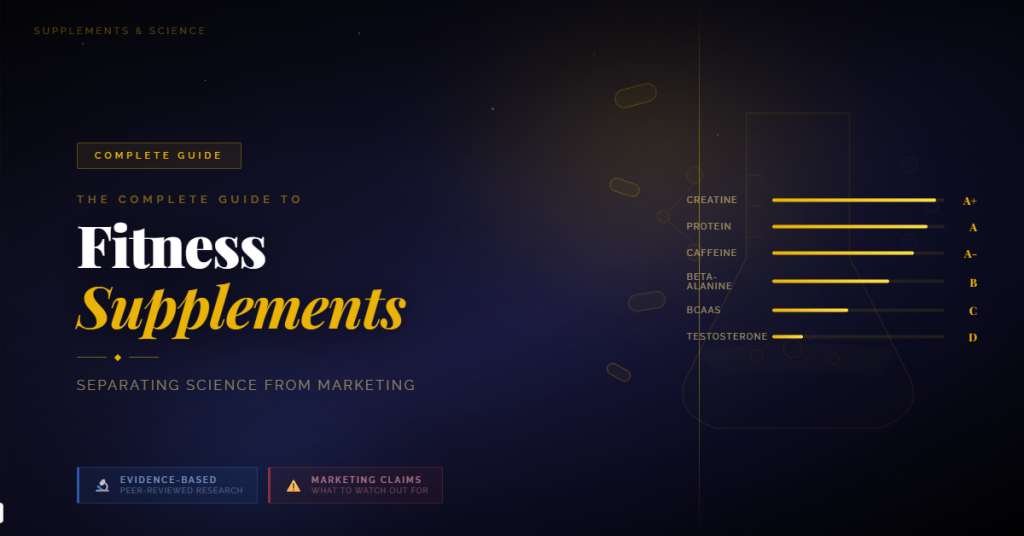
Protein powder is perhaps the most practical supplement for fitness enthusiasts. While you can certainly get adequate protein from whole foods, protein powder offers convenience and efficiency. Whey protein is quickly absorbed, making it ideal post-workout. Plant-based proteins like pea, rice, or hemp provide options for those avoiding dairy. Research consistently supports protein supplementation for muscle recovery and growth when combined with resistance training. Most active individuals need 1.6-2.2 grams of protein per kilogram of body weight daily, and protein powder can help meet these targets conveniently.
Creatine monohydrate is one of the most researched and effective supplements available. It helps regenerate ATP, your muscles’ primary energy source, improving performance in high-intensity, short-duration activities. Beyond performance benefits, creatine may also support cognitive function and has an excellent safety profile. The standard protocol involves taking 3-5 grams daily. The loading phase once commonly recommended is optional—consistent daily use will achieve the same saturation over time.
Caffeine is a proven ergogenic aid that can enhance endurance, power output, focus, and reduce perceived exertion. The performance benefits are well-documented across various types of exercise. Effective doses range from 3-6mg per kilogram of body weight, consumed 30-60 minutes before training. While effective, caffeine should be used strategically to avoid tolerance and sleep disruption.
Beta-alanine buffers lactic acid in muscles, potentially delaying fatigue during high-intensity exercise lasting 1-4 minutes. The tingling sensation it causes is harmless and typically subsides with regular use. Effective doses are 2-5 grams daily, and benefits accumulate over weeks of consistent use rather than being immediate.
Supplements with Moderate Evidence
BCAAs (branched-chain amino acids) have mixed research support. While they may help reduce muscle soreness and support recovery, their benefits are less clear if you’re already consuming adequate protein. For those eating sufficient protein from whole foods or protein powder, additional BCAAs likely provide minimal advantage. They may be useful for training in a fasted state or for individuals with very low protein intake.
Citrulline malate may improve blood flow and reduce fatigue during exercise. Some research suggests benefits for both strength and endurance performance, though results are somewhat inconsistent. Effective doses appear to be 6-8 grams taken before training.
Fish oil (omega-3 fatty acids) provides anti-inflammatory benefits and supports overall health. While not specifically a performance enhancer, omega-3s may aid recovery and support cardiovascular health. They’re particularly valuable if your diet is low in fatty fish. Quality matters significantly with fish oil supplements due to concerns about oxidation and purity.
Supplements with Limited or No Evidence
Many popular supplements lack convincing research support. Testosterone boosters marketed to natural athletes typically don’t significantly increase testosterone in healthy individuals. Fat burners often rely on caffeine and other stimulants for their effects, with proprietary ingredients offering little proven benefit. Detoxes and cleanses are unnecessary—your liver and kidneys handle detoxification efficiently. Massive doses of individual amino acids beyond what’s in protein powder rarely provide additional benefits. Many proprietary blends contain undisclosed ingredient amounts and often include ineffective compounds at sub-therapeutic doses.
Special Considerations for Different Goals
For muscle building, protein powder and creatine form a solid foundation. Beta-alanine may provide additional benefits for high-rep training. Ensure adequate overall caloric intake and protein consumption before adding supplements. For fat loss, focus primarily on diet and exercise. Caffeine may provide modest benefits for both performance and slight metabolic enhancement. Any “fat burner” that seems too good to be true almost certainly is.
For endurance athletes, caffeine can enhance performance in longer events. Beta-alanine may help with high-intensity intervals. Carbohydrate supplements can be valuable during extended exercise sessions. Electrolyte replacement becomes important for longer training sessions, particularly in heat. For general fitness and health, a multivitamin may fill nutritional gaps, though whole foods should be your primary source. Vitamin D supplementation is often beneficial, especially for those with limited sun exposure. Fish oil provides if your diet lacks fatty fish.
Quality and Safety Concerns
Not all supplements are created equal. Look for third-party testing certifications like NSF Certified for Sport, Informed-Sport, or USP Verified. These ensure products contain what they claim and are free from banned substances or contaminants. Be wary of proprietary blends that don’t disclose individual ingredient amounts. Check for realistic serving sizes and appropriate dosages based on research. Read reviews and research companies before purchasing.
Be aware that the FDA does not approve supplements before they reach the market. Manufacturers are responsible for ensuring safety and accuracy of labeling. Some supplements can interact with medications or may not be appropriate for individuals with certain health conditions. When in doubt, consult with a healthcare provider, particularly if you take medications or have health concerns.
Building Your Supplement Strategy
Start with the basics before adding supplements. Ensure your training program is consistent and well-designed. Dial in your nutrition from whole foods first. Prioritize sleep and recovery. Then, consider supplements that address specific, identified needs. Begin with the most researched and effective options like protein powder and creatine if appropriate for your goals. Add other supplements one at a time so you can assess their individual effects. Track your results objectively—supplements should provide measurable benefits. Be willing to discontinue supplements that don’t provide noticeable value.
Common Mistakes to Avoid
Don’t fall for the trap of using supplements to compensate for poor diet or inconsistent training. Avoid buying products based solely on marketing claims or social media influencer recommendations. Don’t take excessively high doses thinking more is better—this can be wasteful at best and harmful at worst. Resist the urge to constantly try new supplements without giving current ones adequate time to work. Don’t ignore individual tolerance and response—what works for others may not work for you.
The Financial Reality
Supplements can be expensive, and costs add up quickly. Prioritize your spending on supplements with the strongest evidence and greatest relevance to your goals. Consider whether the same money might be better spent on higher-quality whole foods, a gym membership, or coaching. Many expensive supplements offer minimal benefits over basic, affordable options. A simple combination of protein powder, creatine, and perhaps caffeine will often provide 90% of the benefits at a fraction of the cost of comprehensive stacks.
Final Thoughts
Fitness supplements can be useful tools in your arsenal, but they work best when supporting an already solid foundation. Be skeptical of bold claims and focus on supplements with strong research backing. Remember that consistency with the fundamentals—training, nutrition, sleep, and recovery—will always matter far more than any supplement. Make informed decisions based on your individual needs, goals, and budget. When used appropriately, the right supplements can provide that extra edge to help you reach your fitness goals, but they’re the icing on the cake, not the cake itself.