
Working Hard But Still Not Getting Ahead?
You show up. You put in the hours. You do the work. But somehow, the financial breakthrough you’re waiting for never quite arrives. Maybe you’ve tried budgeting. Maybe you’ve read articles about investing. But something deeper feels stuck — like your results don’t match your effort.
What if the problem isn’t your strategy? What if it’s your thinking?
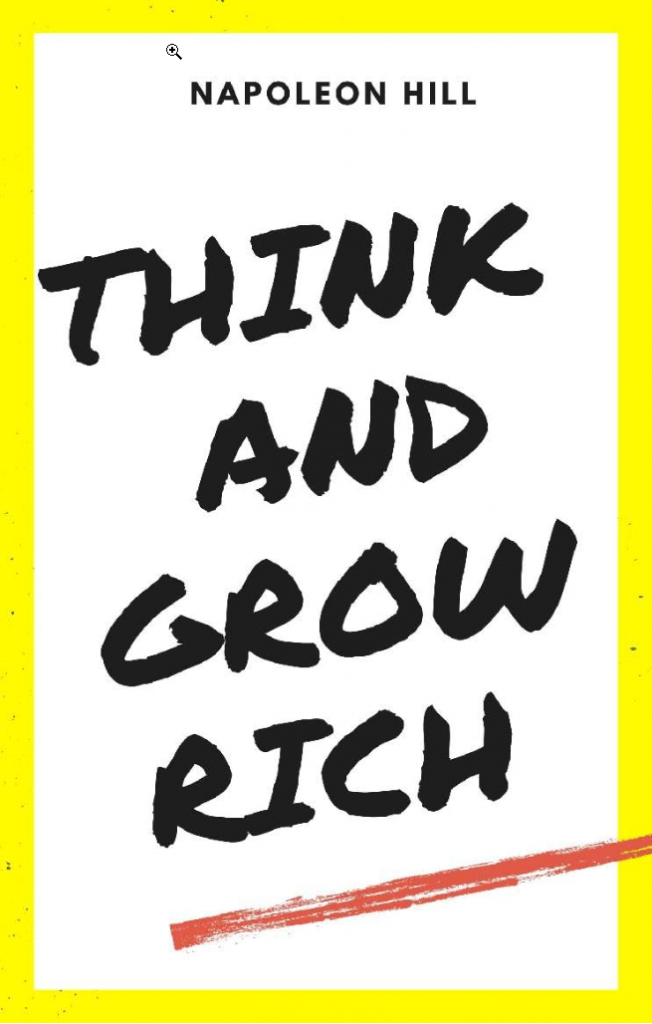
That’s the question at the heart of Think and Grow Rich by Napoleon Hill. First published in 1937, it has sold over 100 million copies worldwide. It’s been called the grandfather of all self-help and wealth-mindset books. Decades later, people are still reading it — and reporting life-changing results. But does it hold up for modern readers focused on building financial literacy? This honest review breaks it all down.
What Is Think and Grow Rich?
Think and Grow Rich is a classic success and wealth philosophy book by Napoleon Hill. Hill spent 20 years studying over 500 wealthy and successful Americans. His subjects included Andrew Carnegie, Henry Ford, and Thomas Edison. The book distills his research into 13 principles for achieving wealth and success. It’s not a budgeting guide. It’s not an investing manual. It’s a deep dive into the mindset, habits, and mental frameworks that Hill believed separated the wealthy from everyone else.
The title is slightly misleading. The book is not just about money. It covers goal-setting, persistence, desire, faith, and the power of the subconscious mind. Hill believed financial success starts in the mind, long before it shows up in your bank account.
Who Is This Book For?
This book is a strong fit for readers who:
- Feel stuck despite consistent effort and want a mindset reset
- Are beginning their financial literacy journey and want a motivational foundation
- Are entrepreneurs, freelancers, or aspiring business owners
- Believe their self-doubt or limiting beliefs are holding them back financially
- Enjoy personal development alongside practical money education
- Want to understand the psychological side of wealth-building
It is not ideal for readers who want concrete financial steps. If you need a savings plan or investment framework, this book won’t provide that. Think of it as the mental groundwork — not the blueprint.
Key Features: What You’ll Actually Learn
1. The Power of a Burning Desire
Hill’s first principle is desire — not vague wishful thinking, but an intense, specific burning want. He argues that all achievement starts with a clear, defined goal. Readers learn to set goals with precision. They also learn to commit to them emotionally. This principle alone has transformed how millions of people approach their financial ambitions. It moves you from dreaming to deciding.
2. Faith and Autosuggestion
Hill dedicates entire chapters to faith and autosuggestion. These concepts ask you to reprogram your subconscious mind. You feed it repeated, intentional thoughts about your goals. Over time, your beliefs begin to align with your ambitions. This may sound abstract. But modern neuroscience and behavioral psychology support the core idea: your self-image directly shapes your financial decisions. Hill just said it first.
3. Specialized Knowledge Over General Education
Hill challenges the idea that formal education equals success. He argues that specialized knowledge — knowing one subject deeply and applying it — is what builds wealth. This reframe is powerful for readers who feel held back by their educational background. It redirects focus toward skills, expertise, and application rather than credentials alone.
4. The Mastermind Principle
One of the book’s most practical concepts is the mastermind group. Hill defines it as a coordinated group of people working toward a shared goal. He believed surrounding yourself with the right people multiplies your intelligence and your results. This idea is foundational in modern entrepreneurship. Coaching circles, accountability partners, and peer groups all trace back to Hill’s mastermind principle.
5. Persistence as a Non-Negotiable Trait
Hill dedicates a full chapter to persistence. He calls it the sustained effort necessary to induce faith. His message is blunt: most people quit too soon. This chapter is especially valuable for readers who have started working toward financial goals — and stopped. It’s a motivating, honest kick that reminds you quitting is the only guaranteed path to failure.
6. Decision-Making and the Cost of Procrastination
Hill studied the decision-making habits of wealthy individuals. He found that successful people decide quickly and change their minds slowly. Unsuccessful people do the opposite. This insight applies directly to financial behavior. Delaying investment decisions, avoiding debt conversations, or postponing savings plans all have measurable costs. Hill makes that cost impossible to ignore.
7. The Subconscious Mind as a Financial Tool
Hill argues that the subconscious mind works 24 hours a day. It processes information even while you sleep. He teaches readers how to direct that power intentionally. Through repetition, written goals, and emotional investment, you can align your deeper mental patterns with your financial objectives. It sounds unconventional. But countless successful readers credit this principle as their biggest breakthrough.
Honest Pros and Cons
✅ Pros
- Foundational and timeless. The core principles hold up across generations. Desire, persistence, and specialized knowledge never go out of style.
- Addresses the root of financial struggle. Most money problems are mindset problems first. This book goes to the source.
- Highly motivating. Hill writes with conviction. The stories of real people overcoming real obstacles are genuinely inspiring.
- Short and readable. The book moves quickly. Most readers finish it in under a week.
- Affordable. Widely available in paperback, eBook, and free public domain versions. One of the highest-value books you can buy.
- Pairs well with tactical finance books. It builds the mental foundation that makes practical money advice actually stick.
❌ Cons
- Dated language and examples. Published in 1937, some sections feel archaic. Readers need to mentally update references to stay engaged.
- No practical financial steps. You won’t find budgets, investment strategies, or debt plans here. It’s philosophy, not tactics.
- Overly mystical at times. Concepts like the “Infinite Intelligence” and “sexual transmutation” may alienate skeptical or secular readers.
- Historical context is problematic for some. Hill’s research methodology and some of his claims about his sources have been questioned by historians. Critical readers should approach with awareness.
- Can feel repetitive. Hill revisits core themes multiple times across chapters. Some readers find this reinforcing; others find it padded.
- No acknowledgment of systemic barriers. The book assumes success is purely a product of mindset. It doesn’t account for structural inequalities that affect financial outcomes.
How It Compares to the Competition
vs. The Psychology of Money by Morgan Housel
Housel’s book is the modern successor to Hill’s mindset work. It’s grounded in behavioral finance research. It uses real data and modern stories. The writing is cleaner and more objective. Where Hill tells you to believe and act, Housel shows you why humans are wired to make bad financial decisions and how to work around it. Both books address money psychology. But Housel is more nuanced and accessible for today’s reader. If you want one book, start with Housel. Hill will give you the fire; Housel gives you the framework.
vs. Rich Dad Poor Dad by Robert Kiyosaki
Kiyosaki’s classic sits closer to the tactical end. Introducing concepts like assets vs. liabilities, passive income, and financial independence. It’s more practical than Hill, but also more controversial. Kiyosaki has faced criticism for oversimplifying financial strategy. Hill’s book, by contrast, never claims to give you an investing plan. It gives you a philosophy. Both books are about shifting how you see money. Hill goes deeper into mindset. Kiyosaki goes further into mechanics. Together, they form a powerful pairing but Hill is probably the more honest of the two about what it actually is.
Bottom line: Think and Grow Rich fills a unique niche. No other book focuses as purely and powerfully on the mental side of wealth. That’s its lasting value and its clearest limitation.
Pricing Breakdown
Think and Grow Rich is one of the most affordable books in personal finance:
- Paperback: Typically $8–$15 depending on edition and publisher
- Hardcover: Usually $18–$25 for premium or annotated editions
- Kindle / eBook: Often $5–$10, sometimes less during promotions
- Audible: Available as an audiobook — ideal for commuters
For a minimal inventest ment this book can shift how you think about money, ambition, and effort. The return, if you apply the principles, is potentially significant.
👉 Check the latest price and format options on Amazon here.
Who Should Buy This Book?
Buy it if you:
- Feel held back by self-doubt, fear, or limiting beliefs about money
- Are starting your financial literacy journey and want a motivational anchor
- Are an entrepreneur or aspiring business owner who wants a mindset edge
- Have tried practical money strategies but can’t seem to follow through consistently
- Want to understand the psychological roots of wealth and success
- Are building a personal development library and want the foundational classic
Skip it or supplement it if you:
- Need a step-by-step debt payoff or investment plan right now
- Are a skeptic of mindset-first approaches and prefer data-driven advice
- Are bothered by mystical or spiritual language in nonfiction
- Want a modern, research-backed perspective on financial psychology instead
- Are already operating with a strong wealth mindset and need tactical next steps
Final Verdict
Think and Grow Rich is not a perfect book. It’s dated in places. Some claims are hard to verify. And it won’t give you a savings plan. But it does something few finance books ever attempt , it goes after the root cause of financial struggle. It names the beliefs, habits, and mental patterns that quietly keep people from building the life they want.
Over 100 million copies don’t lie. The ideas in this book have shaped entrepreneurs, executives, athletes, and everyday people for nearly 90 years. The principles aren’t perfect. But they are powerful, if you engage with them seriously and pair them with practical financial tools.
For anyone on a financial literacy journey, this book belongs in your library. It won’t replace a budgeting app or an investment strategy. But it may be the reason those tools finally start working for you.
⭐⭐⭐⭐ — 4 out of 5 stars for motivated readers ready to examine their money mindset
👉 Get your copy of Think and Grow Rich on Amazon and start building the mindset that makes every other financial strategy work better.
Affiliate Disclosure: This post contains affiliate links. If you purchase through our links, we may earn a small commission at no additional cost to you. We only recommend books and resources we genuinely believe can support your financial growth.